
What is a Duct Bank? The Underground Cable Highway Explained
Many people have encountered the frustrating issue of construction crews digging up the same street twice within a three-year period. This problem is caused
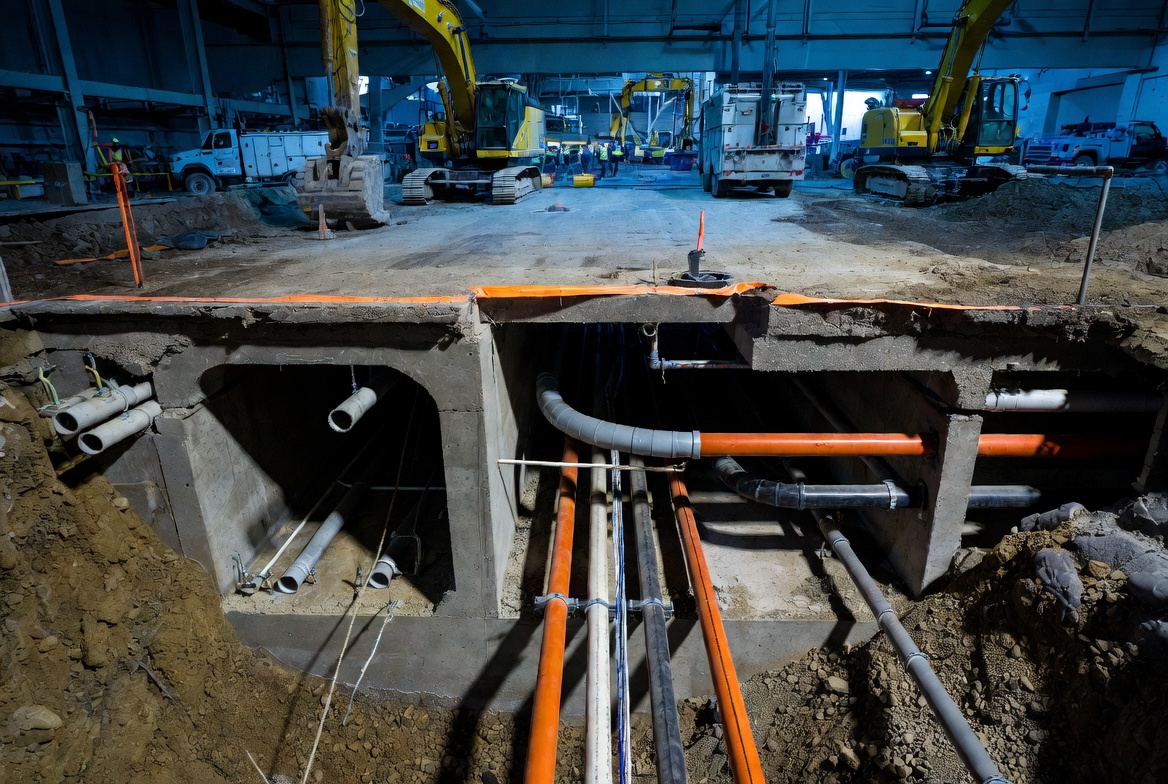
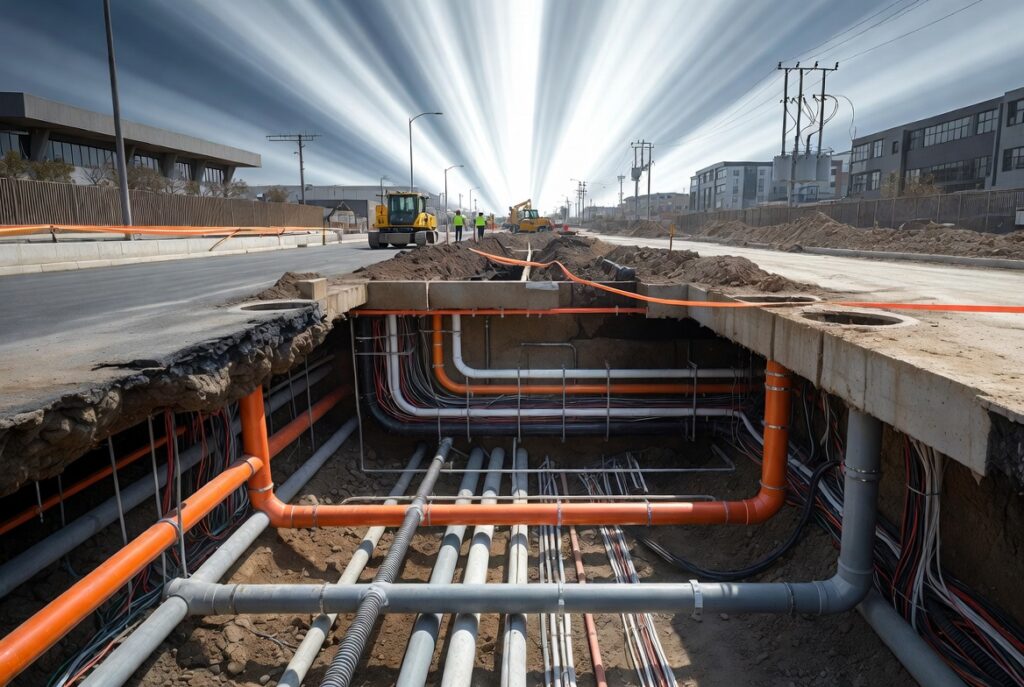
by the failure to install underground cable conduit bundles: these bundles are made of 2- to 6-inch PVC or HDPE pipes, which are secured into a grid with plastic spacers and then buried in concrete. Resembling a solid block with straws inserted through it, these bundles can accommodate all types of cables, and contractors refer to them as the
pre-planning carrier that allows roads to be fully constructed before they are opened to vehicular traffic.
Why Smart PMs Insist on Duct Banks
Many engineering practitioners believe that direct-buried cables have lower on-paper costs, but in reality, substantial additional expenses are incurred during the construction and maintenance phases.
A duct bank fixes both headaches:
- Real protection: Concrete + pipe means a backhoe won’t slice your 33kV line during the next road job
- Future pulls: Leave 2-3 empty ducts with pull rope inside. Client adds load in 2028? You fish a new cable through. No excavation, no change order drama.
I’ve priced jobs where adding 30% spare ducts on day one saved the client $90K in rework later. That’s why we always break it out when we do cost estimating for underground utilities.
Where Duct Banks Show Up in Real Projects
- Under city roads for utility primary – 11kV, 33kV, 132kV runs
- From pad-mount transformer to building main switchgear
- Data center yards where fiber and power can’t share a trench
- Hospitals, universities, airports – anywhere expansion is guaranteed
Once the duct bank is in, cable and terminations come next. For conductor sizing, terminations, and testing scope, check our electrical estimating services.
If your project has HVAC controls, fire alarm, or low-voltage wiring in the same trench, we handle that too under our MEP estimating services so nothing gets missed between trades.
The Takeoff Details That Make or Break Your Bid
Pipe footage and concrete yards are obvious. The money leaks happen here:
- End bells on every duct mouth – stops cable jacket from shredding during pulls
- Pulling rope left in each duct – saves half a day labor per run later
- Handholes every 300-400 ft – NEC won’t let you pull 800 ft straight
- Warning tape 12″ above concrete – because someone will dig there eventually
This is exactly why we run a separate quantity takeoff service for duct banks. Miss these small items and your BOQ looks cheap. Win the job, lose money on site.
3 Duct Bank Facts Your Competitors Won’t Tell You
1. Concrete Steals Ampacity
Many electrical industry professionals have encountered the pitfall of having their bids rejected: a cable rated for 400A for open-air outdoor use can only carry a current of 280–320A when buried in a concrete conduit. Mandatory derating is
required for this scenario per NEC 310.60(C)(70), a rule that most online industry media outlets overlook. All of our bills of quantities explicitly note this requirement, to avoid the losses caused by failing acceptance inspections and having to repurchase cables.
2. Mandrel Test = Insurance Policy
During the concealed burial construction of municipal conduits, we use a 12-inch steel core mandrel to inspect for conduit malfunctions before concrete pouring, and
conduct a re-inspection with a calibration brush after pouring. This process, which costs only $2–$4 per foot, is included in the bill of quantities for the conduit construction team. It can avoid major rework losses that exceed $200 per foot and require the demolition of 20 feet of structure.
3. Spare Ducts Pay for Themselves
Per the utility spec requirements for the public utilities sector, the 6 in-use live ducts must be paired with a
total of 8–9 main pipelines, reserving 25%–33% of the total as backup pipelines. Clients often question the need to pay for unused empty pipelines. Currently, adding an extra pipeline costs only 12 USD per foot, while future trenching to install additional pipelines would cost 80–120 USD per foot. The BOQ must provide clear, actionable data for frontline PMs, which can generate six-figure cost savings.
Need Duct Bank Quantities Fast?
Send us the civil/electrical drawings. We’ll pull the duct count by size, concrete volume, excavation, and flag the thermal derating. Turnaround is 24 hours for most site plans.